
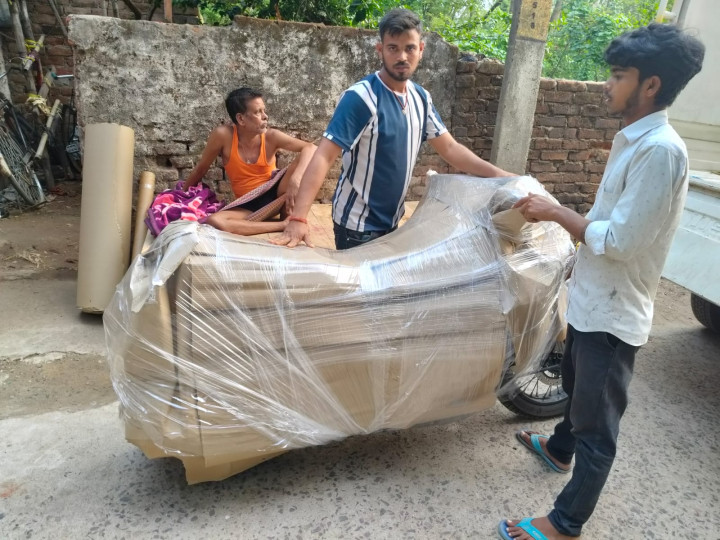
Ask five people in Ranchi how they booked their last mover, and you'll probably get five different answers. Some filled out a quick form online and had a price in their inbox within minutes. Others called a number, described their flat, and waited for someone to phone back with a figure. Both routes get you a quote - but they don't get you the same kind of quote, and the gap between the two matters more than most people realise until moving day actually arrives and the truck is parked outside, waiting.
What Exactly Is a Digital Moving Quote?
A digital quote works off whatever you type into a form: number of rooms, rough distance, maybe a dropdown for "1BHK" or "2BHK." It's fast, available at midnight, and doesn't require talking to anyone before you're ready to. For a straightforward move - say, a bachelor shifting between two similar apartments in Lalpur, with no lift, no unusual furniture, and a clear approach road on both ends - that speed is genuinely useful. You get a ballpark number in minutes, can compare a few companies side by side, and narrow down your options before you ever pick up the phone. For a generation that's used to instant answers for everything else, that convenience isn't trivial.
And What Counts as a Traditional Estimate?
A traditional estimate involves an actual conversation - sometimes a phone call, sometimes an in-person visit - where someone asks about your specific situation rather than relying on a form's fixed fields. It takes longer, and in a market where everyone wants an instant answer, "we'll call you back after checking a few things" can feel like unnecessary friction. But that friction is usually exactly where the accuracy comes from. A person on the phone can ask a follow-up question that a dropdown menu never thought to include, and that one extra question is often what separates a quote that holds up from one that doesn't.
Where the Digital Number Tends to Break Down
The trouble with a form-based quote shows up the moment your move isn't textbook-simple, which, honestly, describes most moves once you look closely. A form can't see that a building on Ratu Road has no lift and a narrow gate that forces the truck to park half a block away, meaning every box gets carried that extra distance by hand. It doesn't know that a Doranda society only allows loading between 10 AM and 4 PM, which can turn a half-day job into a scheduling puzzle. It can't tell a 2BHK with a modest hall apart from a 2BHK stacked with a decade of accumulated furniture, three almirahs, and a piano nobody mentioned. Those details change labour time and vehicle size - and they change the final bill along with them, whether or not the digital number ever accounted for them in the first place.
Why the Human Step Still Earns Its Place
Floor access, parking distance, whether the goods lift is actually working that particular week, whether recent monsoon rain has made a lane temporarily unusable for a large vehicle - none of that shows up in a dropdown menu, and all of it can affect the final bill if it gets missed upfront. A conversation catches these things in a way a form structurally can't, simply because someone is actively listening for the exception rather than filling in a fixed field. That's not a knock on digital tools; it's just a different kind of information, gathered a different way, and both have their place depending on what's being moved.
A Ranchi Customer's Take
This distinction isn't just theoretical. One Ranchi customer of Sanatani Packers and Movers mentioned in a review that after booking, the final pricing matched exactly what had been discussed beforehand - adding, a little wryly, that this "rarely happens these days." That single line captures what this whole comparison is really about: not digital versus traditional as an abstract debate, but whether the number you're quoted survives contact with the actual move, once the packing tape comes out and the stairs turn out to be narrower than anyone remembered.
So Which Should You Actually Trust?
For a simple, same-building-type local shift, a digital estimate is usually close enough to be useful for comparison shopping. For anything with access complications - an older Kokar lane, a Hinoo high-rise with restricted loading hours, a move that bundles vehicle transport with household goods, or timing that has to work around a society's rules - a conversation before the quote is finalised tends to hold up better once the truck actually shows up. In practice, the most dependable approach blends both: get a digital ballpark fast to know roughly what you're working with, then confirm the details a form can't ask about - floor, access, quantity, timing - over a quick call or WhatsApp message before anything is finalised.
One Habit Worth Keeping
If a quote looks unusually low, ask what's been left out before agreeing to it. The difference is often not in the truck itself. It's almost always tucked into packing, labour, insurance, or handling that got quietly assumed rather than stated upfront - and asking that one question upfront tends to save far more trouble than it costs.